Indoor Armored fiber cable
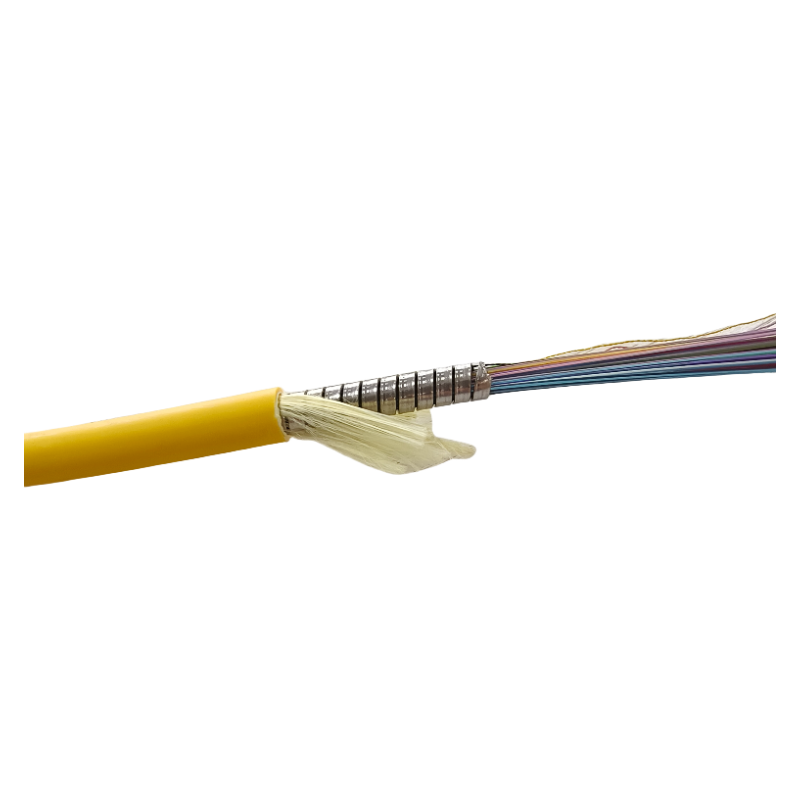
48 Core Indoor Armored Fiber Optic Cables Suppliers
- Priceļ¼šNegotiable Contact Us Email:sales@hhdfiber.com
48 Core Indoor Armored Fiber Optic Cables Suppliers
rodent bite-resistant?bird bite-resistant optical cable?pressure-resistant?crush-resistant?
Key Advantages:
*Small 6.0mm outer diameter, minimizing space usage in tight indoor setups*Stainless steel armor: rodent-resistant, bird bite-resistant, crush-proof, and built for long-term durability
*Exceptional flexibility and bend resistance for easy routing in complex indoor environments
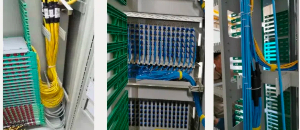
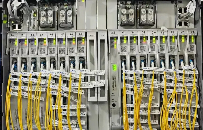
*Seamless compatibility with ODF solutions, ensuring optimized integration into existing network infrastructure
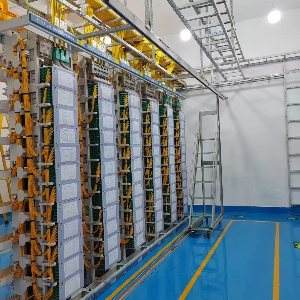
*Ideal for data centers, corporate networks, and indoor telecom setups where reliable performance, space efficiency, and low-maintenance durability are essential requirements
Parameter
| Parameter | 48 Core Indoor Armored Fiber Optic Cables |
| Fiber Type | Single-Mode (OS2) / Multi-Mode (OM1, OM2, OM3, OM4) |
| Core Diameter | Single-Mode: 9/125 µm |
| Multi-Mode: 50/125 µm or 62.5/125 µm | |
| Outer Cable Diameter | 6.0mm ± 0.3 |
| Jacket Material | LSZH (Low Smoke Zero Halogen) |
| Armor Type | Stainless Steel armor |
| Tensile Strength | ? 400 N (Short-Term) |
| ? 200 N (Long-Term) | |
| Crush Resistance | ? 4000 N |
| Bending Radius | Dynamic: 25 |
| Static: 25 | |
| Operating Temperature | -40°C to +80°C |
| Storage Temperature | -40°C to +80°C |
| Attenuation | Single-Mode:1310 nm @ 1550 nm |
| Multi-Mode: @ 850 nm @ 1300 nm | |
| Bandwidth | Multi-Mode: ? 200 MHz·km @ 850 |
| ? 500 MHz·km @ 1300 nm | |
| Connector Options | LC, SC, ST, FC,Waterproof connector (Customizable) |
Compact, Space-Saving Design
As a leading variant of armored fiber optic cable, our 48-core indoor model features an ultra-slim 6.0mm outer diameter, excelling in space-constrained setups. Its compact design reduces clutter in cable trays and ODF (Optical Distribution Frame) units while simplifying installation—directly cutting labor time and costs. This makes it ideal for projects requiring efficient indoor armored fiber optic cable deployment with tight schedules.Superior Durability
The rugged armor of our 48-core indoor armored fiber optic cables—hallmark of high-quality armored fiber optic cable design—provides robust protection against diverse hazards. It offers rodent and bird bite resistance, ensuring long-term integrity in areas prone to such threats. Additionally, the armor shields internal fibers from pressure, crush, and mechanical stressVersatile Compatibility
This indoor armored fiber optic cable is compatible with LC, SC, FC, ST, and MPO connectors, seamlessly integrating with existing networks and ODF systems. Whether upgrading legacy armored fiber optic cable setups or building new infrastructure, its versatility ensures flexible, reliable connectivity—critical for diverse indoor environments.High-Performance Transmission
Our 48-core armored fiber optic cable supports single-mode (9/125?m, OS2) and multi-mode (OM1-OM5) fibers, catering to varying bandwidth needs. As a premium indoor armored fiber optic cable, it delivers consistent performance in data-intensive scenarios, making it indispensable for ODF-integrated networks and high-traffic telecom setups.Tailored for Indoor & ODF Environments
Specifically engineered for telecom-focused indoor setups and ODF systems, our 48 Core Indoor Armored Fiber Optic Cables combine the reliability of armored fiber optic cable with the precision required for ODF armored fiber cable applications. They withstand heavy loads, ensuring low-maintenance, high-efficiency connectivity—trusted by suppliers and installers worldwide.
Notes on the Use of Fiber Optic Patch Cables
Do not excessively bend or loop fiber optics during use, as this will increase attenuation in the light transmission process. After using a fiber optic patch cable, always protect the fiber connector with a protective sleeve—dust and oil stains can damage fiber coupling. If the fiber connector gets dirty, clean it with a cotton swab dipped in alcohol; otherwise, communication quality will be affected.
Before use, the ceramic ferrule and its end face of the fiber optic patch cable must be wiped clean with alcohol and absorbent cotton.
During use, the minimum bending radius of the fiber can be less than 30mm (except for the G652 series).
Protect the ferrule and its end face from scratches and contamination; put on the dust cap promptly after disassembly.
Do not look directly at the fiber end face when laser signals are being transmitted.
If damage occurs due to human factors or other force majeure, replace the damaged fiber optic patch cable in a timely manner.
Read the instruction manual carefully before installation, and carry out installation and debugging under the guidance of engineers from the manufacturer or distributor.
If an abnormality occurs in the fiber optic network or system, troubleshooting methods can be used for testing one by one. When testing or eliminating patch cable faults, a continuity test can be done first—usually, a visible laser pen can be used to emit light through the entire fiber link for judgment. Alternatively, a precision fiber insertion loss and return loss tester can be used to test its various indicators. If the indicators are within the qualified range, the patch cable is in normal condition; otherwise, it is unqualified.
Product Category
Recommend News
- Multi-Core Micro Armored Fiber Cable for High-Density AI Data Centers2026-07-21
- 2026 Chinese Lunar New Year Holiday Notice2026-02-10
- .Pre terminated armored fiber optic cable2026-02-07
- The application of armored fiber cables in fiber-optic drones.2026-02-06
- Armored Fiber Cable vs. Unarmored Fiber Cable for Fiber Optic Solutions2025-12-12
Contact Us
Addressļ¼šMinzhu western Industrial, Shajing 518104, Bao an Dist.,Shenzhen.China?
Telļ¼š86-755-15994748729
Faxļ¼š86-755-15994748729
Urlļ¼šhttps://www.hhdfiber.com/
E-mailļ¼šsales@hhdfiber.com