Industry news
Fiber Optic Drones: The New Favorite of the Era
Fiber Optic Drones: The New Favorite of the Era
With the expanding applications of drones across industries—from industrial inspections to smart agriculture—the demand for Fiber Optic Drones, and thus optic fibers, has been climbing steadily.
As drone technology penetrates more sectors (such as logistics, environmental monitoring, and infrastructure maintenance), market demand for Fiber Optic Drones—and the fiber optic cables they rely on—has surged significantly.
Driven by the growing adoption of drones in commercial and civilian fields, the need for Fiber Optic Drones (and their supporting optic fibers) is witnessing a notable upward trend.
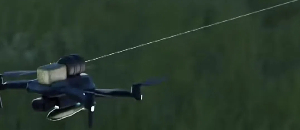
The optic fibers are housed in such spools. The flight range typically ranges from 5 to 20 kilometers.
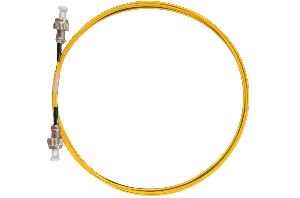
The optic fibers inside the spool look just like kite strings. However, they only transmit data and bear little to no mechanical stress.
Without the protection of an outer sheath, optic fibers aren’t particularly robust. That’s why, during flight, it’s critical to avoid obstacles to minimize the risk of breakage. These bare fibers, while lightweight and ideal for long-distance data transmission in drone operations, lack the durability of armored fiber optic cables—making their handling and deployment a careful process.Armored fiber cables, non armored fiber cables, and bare optical fiber all have their own strengths and play a vital role in their respective fields.
In modern industries where real-time data transmission and secure connectivity are pivotal, Fiber Optic Drones have quickly become a transformative innovation—earning them recognition as a "standout solution for smart operations."
Unlike traditional wireless drones, which are vulnerable to jamming and interception, these drones rely on bare optic fibers to transmit data. This gives them an unrivaled edge: electromagnetic interference (EMI) immunity.
In commercial and civilian settings, their presence is increasingly prominent. Operators are often seen organizing spools of glowing optic fibers beside equipment, preparing to launch Fiber Optic Drones that can fly 5–50 kilometers while unspooling these thin, kite string-like fibers. The fibers, though fragile without outer sheaths, are lightweight enough to avoid weighing down the drones, making them ideal for extended missions in fields like remote infrastructure inspection or large-scale environmental surveillance.
In short, Fiber Optic Drones aren’t just tools—they’re revolutionizing how industries handle data transmission. And as smart technologies continue to evolve, their role, alongside fiber optic patch cord cables, armored fiber optic cables, and optic fibers, as cornerstones of efficient, secure connectivity is only set to expand.
News Category
Recommend News
- Multi-Core Micro Armored Fiber Cable for High-Density AI Data Centers2026-07-21
- 2026 Chinese Lunar New Year Holiday Notice2026-02-10
- .Pre terminated armored fiber optic cable2026-02-07
- The application of armored fiber cables in fiber-optic drones.2026-02-06
- Armored Fiber Cable vs. Unarmored Fiber Cable for Fiber Optic Solutions2025-12-12
Contact Us
Address:Minzhu western Industrial, Shajing 518104, Bao an Dist.,Shenzhen.China?
Tel:86-755-15994748729
Fax:86-755-15994748729
Url:https://www.hhdfiber.com/
E-mail:sales@hhdfiber.com